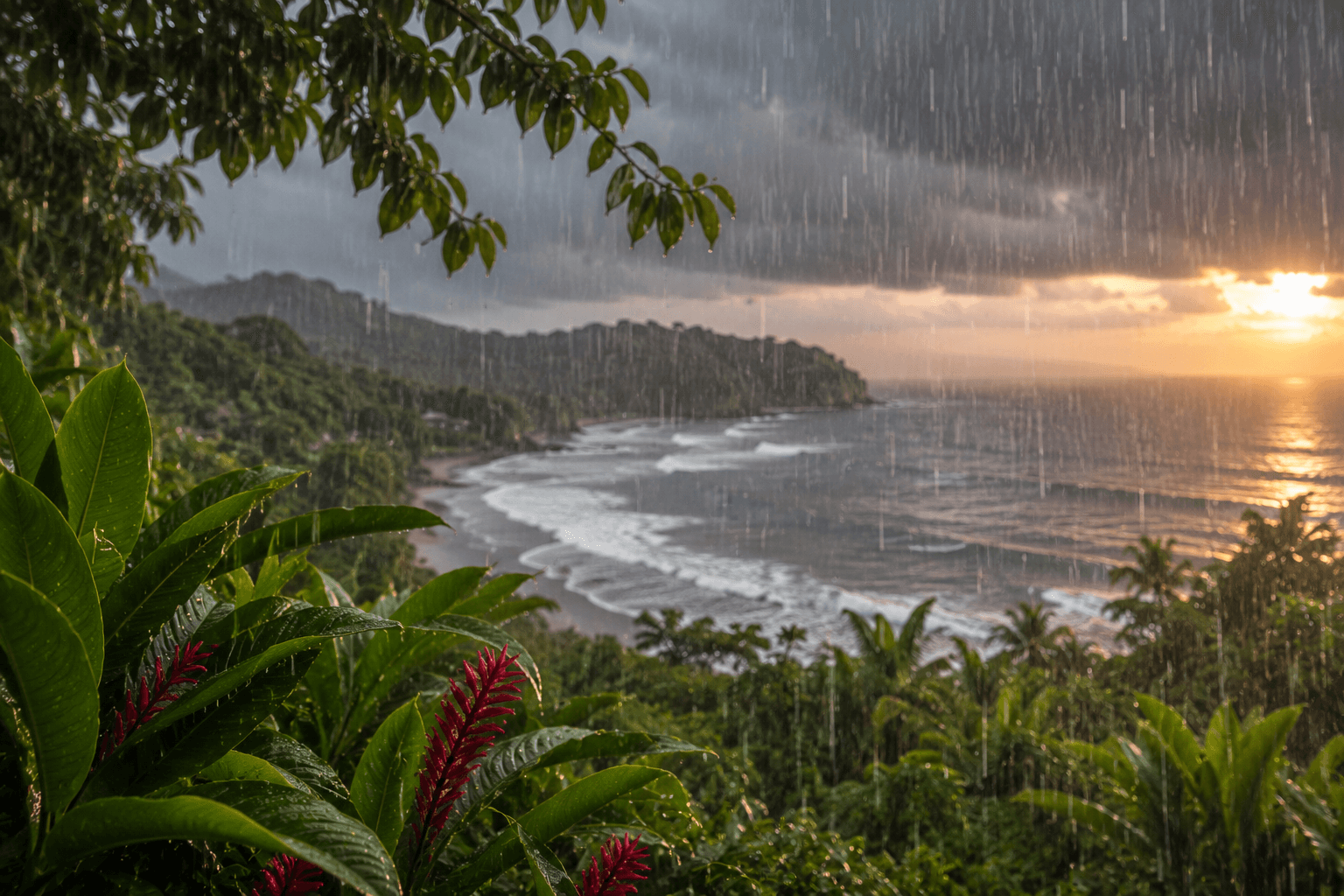

Rainy season coastline in Guanacaste Costa Rica

Expat Families

The Truth About Rainy Season in Guanacaste, Costa Rica

Rob Break

Rob Break

Helping people navigate the real journey of buying in Costa Rica.

The Truth About Rainy Season in Guanacaste, Costa Rica

For many people dreaming about moving to Costa Rica, the idea of “rainy season” sounds intimidating at first.

They picture endless storms, weeks of gray skies, flooded roads, and tropical chaos. Some visitors even try to avoid Guanacaste entirely between May and November because they imagine nonstop rain every day.

Then they arrive and realize something surprising:

Rainy season in Guanacaste is often one of the most beautiful, comfortable, and enjoyable times of the entire year.

In fact, many longtime residents will quietly tell you they actually prefer it.

The landscapes turn electric green, sunsets become dramatic, temperatures cool down, wildlife becomes more active, waterfalls come back to life, and the entire region feels calmer and less crowded.

But rainy season is also real. Roads can flood. Humidity rises. Infrastructure gets tested. Mold becomes part of life. Some businesses slow down. Internet outages happen. And if you move to Costa Rica expecting perfect weather every single day, the transition can feel frustrating.

The reality is that rainy season is both magical and inconvenient at the same time.

And understanding that balance is one of the most important parts of understanding life in Guanacaste.
When Is Rainy Season in Guanacaste?

Rainy season on Costa Rica’s Pacific coast generally runs from:

  • May through November

But that doesn’t mean all months feel the same.

May & June

These are often considered the “green season sweet spot.”

The rains return after months of dry weather, but conditions are usually still very pleasant. Mornings are often sunny and beautiful, while rain arrives later in the afternoon or evening.

The landscape begins transforming almost overnight.

Grass returns.

Trees fill back in.

Dust disappears.

Temperatures cool slightly.

For many people, this is actually one of the best times to be in Guanacaste.

July

July often brings what locals call the “little summer” or veranillo.

This is a temporary break in the rainy season where several weeks can become surprisingly sunny and dry again before heavier rains return later.

Some years it’s more noticeable than others.

August through October

This is usually the wettest stretch of the year.

Storm systems become more consistent, humidity increases, rivers rise, and roads can become more difficult in certain areas.

September and October are often the rainiest months on the Pacific coast.

November

November becomes transition season.

Rain begins easing.

The region starts drying out again.

Tourism slowly returns for high season.

By December, Guanacaste begins entering its famous dry season again.

The Biggest Surprise: It Usually Doesn’t Rain All Day

One of the biggest misconceptions about Guanacaste is that rainy season means constant rain.

Most days actually follow a fairly predictable rhythm:

  • sunny mornings
  • increasing clouds in the afternoon
  • rain or thunderstorms later in the day
  • cooler evenings afterward

A typical rainy-season day may still include:

  • beach time
  • surfing
  • workouts
  • coffee outings
  • school
  • errands
  • sunsets
  • outdoor dining

before rain even starts.

Some storms pass quickly.

Others last several hours.

Occasionally, major weather systems can bring multi-day stretches of rain.

But the idea that Guanacaste becomes nonstop gray for six months is simply not accurate.

Everything Turns Green Again

Dry season in Guanacaste can be stunning, but it is also harsh.

By March and April:

  • hills become brown
  • grass dries out
  • trees lose leaves
  • dust increases
  • temperatures become intense

Rainy season completely transforms the landscape.

The hills explode into green.

Jungle growth returns.

Flowers bloom.

Rivers fill.

Wildlife becomes more active.

People who visit only during dry season often don’t realize how lush Guanacaste can actually become.

The contrast is dramatic.

Many longtime residents feel the region is physically most beautiful during rainy season because the environment feels alive again.

The Sunsets Become Incredible

Some of the best sunsets of the year happen during rainy season.

The increased cloud formations create dramatic skies filled with:

  • deep orange
  • purple
  • pink
  • gold
  • electric blue

Dry season sunsets are often cleaner and simpler.

Rainy season sunsets can feel cinematic.

Storm clouds offshore combined with late-day sunlight often create skies that look almost unreal across Playa Flamingo, Potrero Bay, Tamarindo, Playa Grande, and the surrounding coastline.

Many photographers actually prefer rainy season because the skies become far more dynamic.

Rainy Season Changes Daily Life

Rain affects far more than weather in Guanacaste.

It changes routines.

People begin organizing life around the rhythm of the rain.

Morning Becomes Prime Time

During rainy season, mornings become incredibly valuable.

People schedule:

  • beach walks
  • workouts
  • errands
  • construction
  • surf sessions
  • appointments
  • school activities

earlier in the day because afternoons become less predictable.

The entire region tends to wake up earlier.

Roads Become More Challenging

This is one of the realities many newcomers underestimate.

Heavy rain can quickly affect roads, especially:

  • dirt roads
  • mountain roads
  • river crossings
  • undeveloped areas

Potholes grow rapidly during rainy season.

Some neighborhoods that feel easy to access during dry season become much slower and rougher after weeks of rain.

A property that feels “10 minutes away” in February may feel completely different in October.

This is one reason experienced buyers are strongly encouraged to visit Guanacaste during rainy season before purchasing property.

Rain exposes the true functionality of an area.

Mold Becomes Part of Life

Nobody talks about this enough before moving to Costa Rica.

Humidity during rainy season is intense.

Mold and mildew become ongoing maintenance issues for many homeowners.

People constantly battle:

  • closet humidity
  • mold on leather
  • musty smells
  • rust
  • moisture damage
  • electronics issues

Dehumidifiers become extremely important.

Air conditioning helps.

Good ventilation matters enormously.

Homes designed properly for tropical environments handle rainy season far better than homes designed purely for aesthetics.

Many new expats learn quickly that tropical living requires active home maintenance.

Wildlife Becomes More Active

Rainy season brings the jungle back to life.

You’ll often see more:

  • frogs
  • butterflies
  • monkeys
  • tropical birds
  • crabs
  • insects
  • fireflies

The sounds at night become louder and more alive.

For many people, rainy season feels more authentically tropical because the ecosystem becomes so active.

Surfing Improves

Rainy season is also surf season in many parts of Costa Rica.

Playa Grande and Tamarindo often receive more consistent swell during the green season months.

Serious surfers frequently prefer rainy season because:

  • crowds decrease
  • waves improve
  • temperatures cool slightly
  • conditions become more consistent

This is one reason many experienced surfers quietly love Guanacaste during months tourists tend to avoid.

Tourism Slows Down

Rainy season usually means:

  • fewer tourists
  • quieter beaches
  • easier restaurant reservations
  • less traffic
  • lower rental prices
  • more relaxed atmosphere

For residents, this can be one of the most enjoyable times of year.

The region feels calmer.

Locals reclaim beaches.

Businesses breathe slightly after high season intensity.

Of course, some businesses also slow down financially during this period, especially tourism-dependent operations.

The Emotional Side of Rainy Season

Rainy season affects emotions too.

After months of nonstop sunshine, many residents actually welcome cloudy afternoons and cooler temperatures.

The rain can feel calming.

But extended rainy stretches can also affect mood for some people, especially new expats who moved expecting endless tropical perfection.

Homes feel smaller during storms.

Roads become frustrating.

Plans change constantly.

Rainy season teaches flexibility.

People who thrive in Costa Rica long term are usually the ones who stop fighting the environment and learn to move with it instead.

Why Many Longtime Residents Prefer It

Ask longtime Guanacaste residents their favorite season, and many will surprisingly choose rainy season.

Not because it’s easier.

But because it feels more balanced.

The region becomes:

  • greener
  • cooler
  • quieter
  • calmer
  • less commercial
  • more alive

The pace softens.

There’s something deeply atmospheric about watching storms roll across the Pacific from a covered terrace while jungle sounds echo in the distance.

Rainy season often feels less like a vacation and more like real tropical living.

The Real Truth About Rainy Season

Rainy season is neither paradise nor disaster.

It is simply part of life in Guanacaste.

Some days are stunning.

Some days are messy.

Some days are inconvenient.

Some days feel magical.

And that balance is exactly what many people eventually fall in love with.

Because living in Costa Rica is not about finding perfect weather every single day.

It’s about learning to enjoy the rhythm of a place that still moves with nature instead of constantly trying to control it.

Keep exploring

Back to Expat Families

Open guide

Free Buyer Briefing

Start Here Before You Buy in Costa Rica

A free buyer briefing covering the best towns for different lifestyles, realistic pricing expectations, common buyer mistakes, and what most people wish they knew earlier.