
If you’re planning a move, vacation, or long-term stay in Costa Rica, driving is one of the first things that can feel a little intimidating. The good news? Most people adjust fairly quickly. The roads, driving style, and overall flow are just different from what many North Americans are used to — especially in beach towns and rural areas.
Here’s what to expect when driving in Costa Rica and a few things that might surprise you.
Roads Can Change Quickly
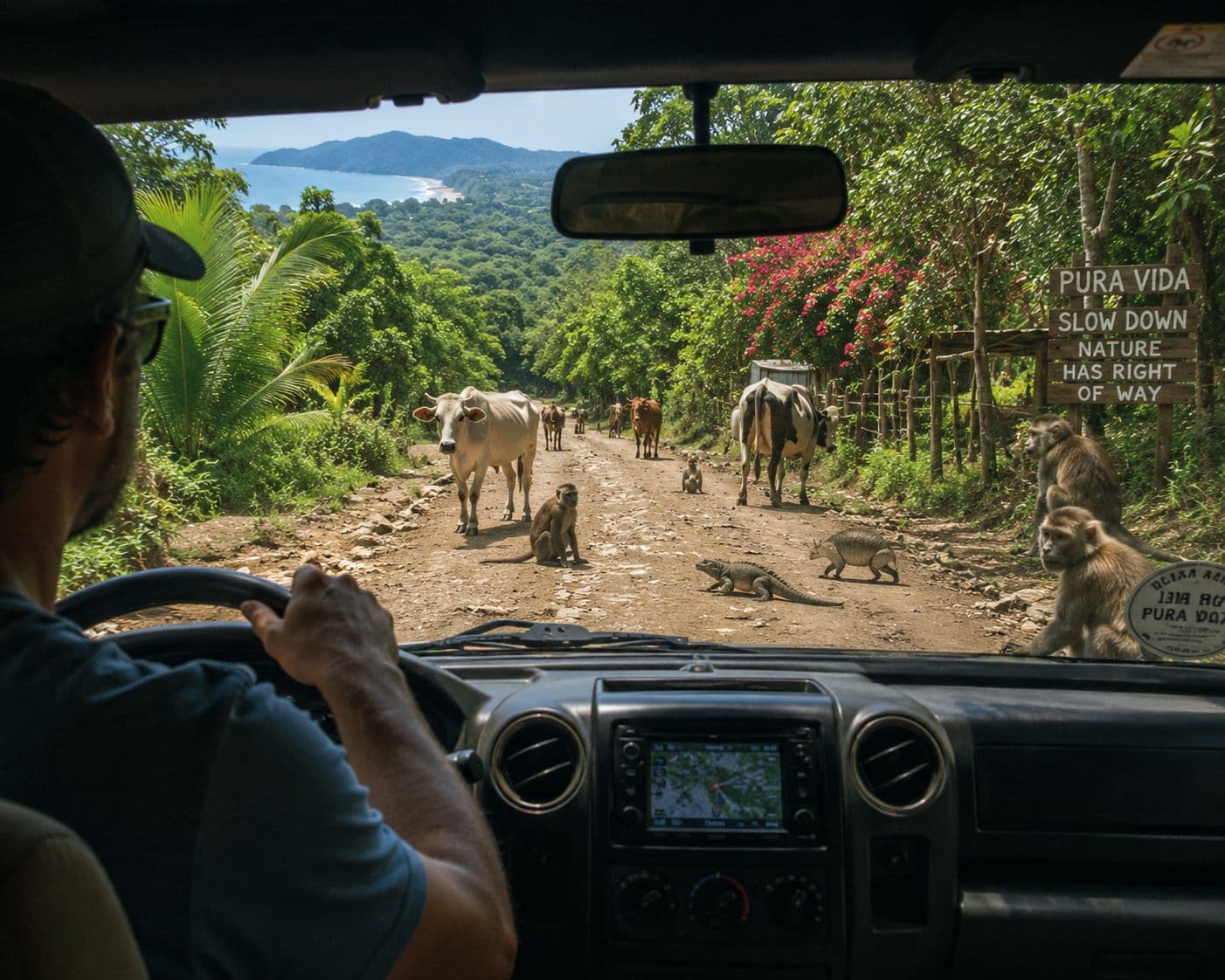
One minute you’re on a smooth paved highway, and the next you’re on a gravel road with potholes, cows crossing, or a riverbed after heavy rain. Even in popular areas like Playas del Coco or surrounding beach towns, road conditions can vary dramatically from one neighborhood to another.
Waze is heavily used in Costa Rica and is usually more accurate than Google Maps for traffic, police checkpoints, road closures, and alternate routes.
Defensive Driving Is Important
Driving in Costa Rica is less aggressive than in many large North American cities, but it can feel less predictable. You’ll often see:
- Motorcycles weaving through traffic
- Cars passing on narrow roads
- Drivers stopping suddenly
- People walking on road shoulders
- Dogs, iguanas, monkeys, or cattle near the road
The key is staying alert and patient rather than rushing.
Turn Signals Are More of a Suggestion
One thing many North Americans notice quickly is that turn signal usage can be inconsistent. Some drivers signal late, some not at all, and others may use hazard lights in situations that seem unusual at first.
You’ll also notice that flashing headlights can mean different things than back home. In Costa Rica, a flash often means “go ahead” or “I’m letting you in,” rather than “watch out.”
Passing Etiquette Is Different
On two-lane highways, slower vehicles will sometimes drift slightly to the shoulder to let faster traffic pass. You may even see drivers use a left signal to indicate it’s not safe to pass yet.
This can feel confusing initially if you’re used to stricter North American lane behavior.
Night Driving Can Be Challenging
Many locals try to avoid long drives after dark, especially outside major towns. Reasons include:
- Limited street lighting
- Narrow roads
- Unmarked potholes
- Animals on the road
- Heavy rain during green season
- Occasional motorcycles or bicycles without lights
A drive that feels easy during the day can feel very different at night.
Rainy Season Changes Everything
During Costa Rica’s rainy season, roads can flood quickly and visibility can drop fast. In beach and rural areas, dirt roads may become muddy or washed out.
This is one reason many expats and residents prefer SUVs or 4x4 vehicles, especially if they live outside main towns.
Patience Goes a Long Way
One of the biggest adjustments for North Americans is simply slowing down mentally. Things move differently in Costa Rica, including traffic. You may get stuck behind a tractor, construction crew, herd of cattle, or delivery truck for a while.
Most locals simply accept it and continue on without much frustration.
Parking and Security Awareness
In busy beach towns, you’ll often see unofficial parking attendants helping direct vehicles into spots. Tipping a small amount is common.
As with anywhere, don’t leave valuables visible in your car, especially at beaches, trailheads, or tourist areas.
Renting vs Owning a Vehicle
Many visitors rent cars initially and later decide whether owning a vehicle makes sense for their lifestyle. In walkable beach towns, some residents rely heavily on golf carts, scooters, or ATVs for short trips.
If you plan to explore waterfalls, mountain towns, surf beaches, or more remote areas regularly, having your own reliable vehicle becomes much more valuable.
Final Thoughts
Driving in Costa Rica is less about strict rules and more about awareness, flexibility, and patience. Once you understand the rhythm of how people drive here, it becomes much less stressful.
For many expats and long-term visitors, driving eventually becomes part of the adventure — scenic coastal highways, jungle roads, mountain views, and spontaneous roadside stops are all part of daily life here.