
Groceries on Costa Rica’s Gold Coast: Cost, Availability, and What New Residents Should Expect
One of the most common questions people ask when considering a move to Costa Rica is simple:
"How expensive are groceries?"
The answer depends largely on what you buy, where you shop, and how closely you try to maintain the same habits you had back home.
The good news is that most people relocating to Guanacaste quickly discover that grocery shopping is easier than expected. The region has modern supermarkets, specialty stores, fresh produce markets, and access to many familiar products from Canada and the United States.
The surprise is usually not availability.
The surprise is which products are cheaper and which are significantly more expensive.
Grocery Shopping Along the Gold Coast
From Playas del Coco south to Tamarindo, residents have access to several grocery options.
Large supermarkets include:
- Auto Mercado
- MegaSuper
- Maxi Pali
- Super Compro
- Vindi
- Independent local markets
Most communities such as Potrero, Flamingo, Brasilito, Coco, Huacas, Tamarindo, and Villareal have grocery options within a short drive.
For specialty products, imported foods, organic products, gluten-free items, premium meats, and international ingredients, many residents rely on Auto Mercado.
For lower-cost everyday shopping, Maxi Pali and local markets are often the preferred choice.
Most full-time residents end up using a combination of both.
Produce is Often Better Than Back Home
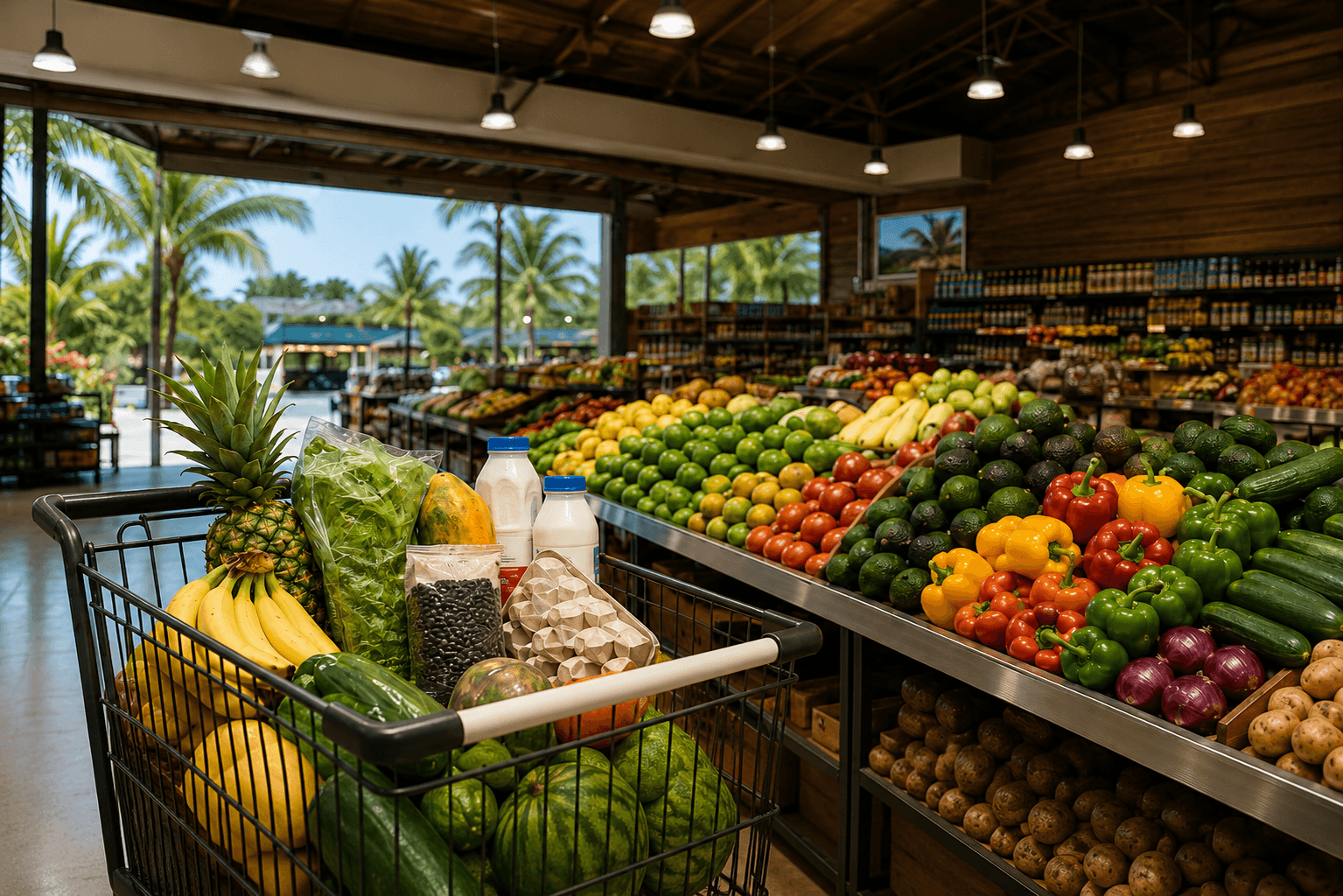
One of the biggest advantages of living in Guanacaste is access to fresh tropical produce.
Depending on the season, you'll regularly find:
- Mangoes
- Pineapples
- Papayas
- Watermelon
- Bananas
- Plantains
- Avocados
- Tomatoes
- Peppers
- Cucumbers
- Lettuce
- Fresh herbs
Many fruits are harvested locally and often taste significantly fresher than imported produce found in northern climates.
Shopping at local fruit and vegetable stands can reduce costs considerably while supporting local farmers.
Many residents eventually build weekly routines around neighborhood produce markets rather than relying exclusively on supermarkets.
What Costs Less?
Generally speaking, these items are often less expensive than in Canada or many parts of the United States:
- Fresh tropical fruit
- Local vegetables
- Rice
- Beans
- Chicken
- Local fish
- Coffee
- Eggs
- Seasonal produce
Costa Rican coffee is particularly affordable compared to imported specialty coffee in North America.
Fresh seafood can also be an excellent value when purchased locally, particularly in coastal communities.
What Costs More?
This is where newcomers are often surprised.
Imported products can be dramatically more expensive due to transportation costs, import duties, and taxes.
Items that commonly cost more include:
- Imported cereals
- Specialty snacks
- Canadian and American brand products
- Certain cheeses
- Imported wines
- Specialty sauces
- Health foods
- Protein supplements
- Vitamins
- Pet food brands from North America
Many newcomers initially fill their carts with familiar imported brands and conclude that Costa Rica is expensive.
After a few months, most discover local alternatives that significantly reduce grocery costs.
Meat and Seafood
The quality of meat in Guanacaste has improved substantially over the past decade.
Most supermarkets offer:
- Beef
- Chicken
- Pork
- Seafood
- Imported cuts
- Premium selections
Local beef is widely available and often excellent quality.
Fresh fish availability depends on weather, season, and local fishing activity, but coastal residents typically have access to:
- Mahi-mahi
- Tuna
- Snapper
- Grouper
- Shrimp
Many residents develop relationships with local fish suppliers and fishermen for the freshest options.
Specialty Diets
Years ago, maintaining a specialty diet in Costa Rica could be challenging.
Today, that's largely changed.
Many stores now stock:
- Gluten-free products
- Dairy-free alternatives
- Plant-based products
- Organic foods
- Protein products
- International ingredients
The selection is not as extensive as a major North American city, but it is far better than many people expect.
Pet Food and Pet Supplies
For families relocating with pets, grocery and pet supply availability is generally very good.
Most common dog and cat foods are available throughout the region.
However, imported premium brands can be considerably more expensive than they are in Canada or the United States.
Many pet owners gradually transition to locally available premium brands after relocating.
What Does a Typical Family Spend?
The biggest variable is lifestyle.
A family that shops primarily local products and cooks most meals at home may find grocery costs comparable to or slightly lower than Canada.
A family purchasing large quantities of imported products, premium specialty foods, and North American brands may spend considerably more.
Most full-time residents find that grocery spending becomes more efficient after the first few months as they learn where to shop and which local products offer the best value.
The Bottom Line
Costa Rica's Gold Coast is not a place where groceries are universally cheaper.
Instead, it rewards flexibility.
People who embrace local produce, local brands, local seafood, and local shopping habits often enjoy excellent quality food at reasonable prices.
Those who try to recreate the exact shopping cart they had in Canada or the United States usually experience sticker shock.
The encouraging news is that grocery shopping in Guanacaste is far easier, more modern, and more convenient than many prospective residents expect.
For most families, the adjustment period is measured in weeks, not years. Before long, fresh pineapple, local coffee, and weekly produce runs become part of everyday life.